
Claude AI Search in Northampton: Get Your Business Recommended, Not Overlooked

Local visibility, wherever your customers search

AI Recommendations Depend on More Than Google Rankings

Quick Summary: Claude AI Search doesn’t use the same ranking factors as Google Maps. A business can sit at the top of local search results and still get skipped entirely when someone asks Claude for a recommendation, because Claude reads structured data, review content and consistency, not star position.

Here’s the bit that trips people up. You’ve spent months getting your Google Business Profile sorted, you’re sitting nicely in the map pack, and you assume that’s the job done. But Claude doesn’t look at your map position at all. It pulls from a different mix of signals entirely.
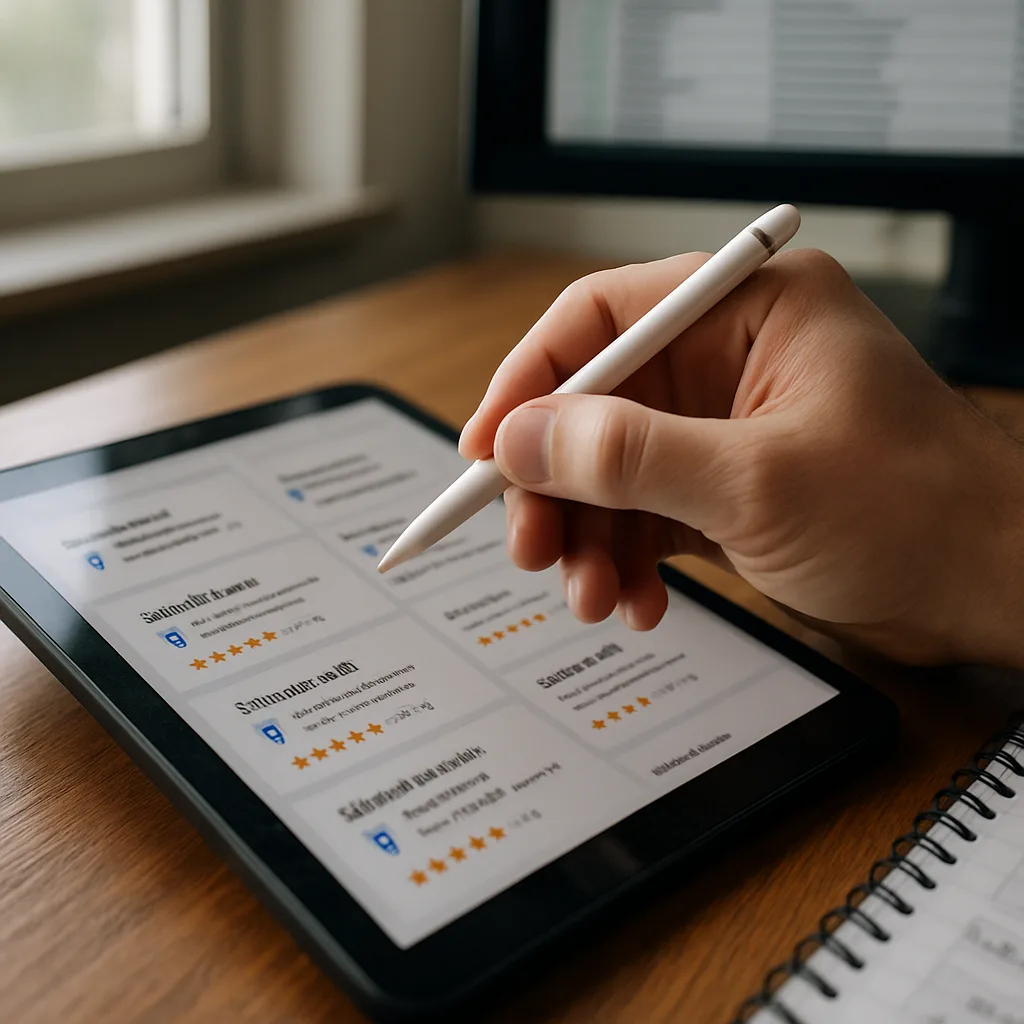
Hand reviewing business citations and reviews on tablet for AI search Northampton

We see this every single week with clients across Northampton. A shop with heavy foot traffic on Abington Street can rank third or fourth on Google Maps and still show up first when we test Claude, because their review text mentions specific products and their opening hours are consistent everywhere online. Meanwhile a competitor ranked first on Maps gets left out completely.

  • Structured data on your website, does it clearly state what you do and where
  • Review content, not just star rating but the actual words customers use
  • Consistency of your business name, address and phone number across the web
  • How recently your Google Business Profile has been updated with posts or photos

None of this means Google rankings don’t matter, they still do. It just means they’re one input, not the whole picture. Claude builds its own view of who’s worth recommending, and that view often disagrees with the map pack.

How Claude Decides Which Businesses to Recommend

Claude doesn’t crawl the web and rank pages the way Google does. It pulls from a mix of public data, business listings, and web content it’s been trained on or can access in real time. So when someone asks Claude for a plumber or a dentist, it’s not scanning ten blue links. It’s pattern matching against whatever clean, consistent information it can find about your business.

We check this every week for clients, and the pattern is always the same. Businesses that show up get mentioned because their details line up everywhere, not because they paid for an ad.

  • Your business name, address and phone number match exactly across your website, Google Business Profile and other listings
  • Your services are described in plain, specific language rather than vague marketing copy
  • You’ve got a steady stream of recent reviews Claude can reference for trust signals
  • Your business appears in local citations and directories with the same details every time
  • Your website content answers the questions people type into AI tools

Here’s the bit most business owners miss. If your address on Facebook doesn’t match your Google Business Profile, Claude may just skip you rather than guess. It’s not being awkward, it just can’t confirm you’re the right answer. And that’s the gap between businesses that get named by AI tools and ones that stay invisible.

Not sure if your listings match up right now? That’s more common than you’d think, most businesses have small inconsistencies they’ve never noticed.

Your Google Business Profile Comes Before AI Optimisation

Before any Northampton business spends time or money trying to influence how Claude describes them, there’s a more basic question worth asking: is your Google Business Profile correct? Claude and other AI systems don’t invent local information from nothing. They draw on existing structured data, and Google’s business index remains one of the richest sources feeding those answers. If that source is wrong, outdated, or missing entirely, no amount of AI-specific effort will fix what’s broken underneath it.

Northampton’s business landscape makes this issue more common than owners might expect. Trades operating out of Kingsthorpe, Duston, and the wider county often list a mobile number and little else, with service areas never updated since the profile was first created. Clinics and practices near the town centre frequently have old opening hours sitting alongside a note about a service that closed two years ago. Independent retailers on Abington Street or in the Grosvenor Centre sometimes have profiles that were never claimed at all, leaving Google to guess at details from directory scrapes and old website copies.

  • Unclaimed or unverified Google Business Profile listings
  • Incorrect or missing opening hours, especially around bank holidays
  • No defined service area for mobile trades or home-visit clinics
  • Wrong or outdated address after a move within Northampton
  • Missing categories, so the business doesn’t show for relevant searches
  • No recent reviews, or unanswered reviews sitting untouched for months
  • Duplicate listings created accidentally, splitting reviews and data
Here’s the honest disqualifier: if your Google Business Profile hasn’t been checked, claimed, or updated in the last year, AI optimisation isn’t your next step. Fix the foundation first, because every AI answer engine is ultimately reading from the same messy or accurate source data.

This isn’t about gatekeeping AI visibility behind extra work for its own sake. It’s about sequencing that works. A plumber in Far Cotton with a fully verified profile, correct service radius, and recent reviews gives Claude something solid to summarise. A therapist near Wootton with an unclaimed listing and no category set gives it nothing reliable to work from, regardless of how well-optimised the rest of their online presence might be.

Thinking about Claude AI Search? Let’s talk. %20+44%201604%20913456 Audit your Google Profile and AI search performance for free. GBP Manager is ready to help.

Keeping AI Visibility Consistent Across Every Location

Northampton’s position beside M1 Junctions 15 and 15a has turned the town into a natural hub for logistics firms, distribution centres, and multi-site franchises. Businesses here rarely operate from a single address. A haulage company might run depots in Northampton, Milton Keynes, and Rugby, while a franchise brand could have branches scattered across the M1 corridor. This geographic spread creates a specific challenge for AI search tools like Claude, ChatGPT, and Gemini: they do not automatically treat every branch equally.

AI models build their understanding of a business from whatever structured data, reviews, and web content they can find. When one branch has a well-optimised Google Business Profile, consistent NAP details, and strong review volume, while another has outdated information or duplicate listings, the AI will confidently recommend the strong location and either ignore or misrepresent the weaker one. This is why a customer searching from Wellingborough might get a glowing AI recommendation for your Northampton branch, while someone in Kettering is told your business does not serve their area at all.

  • Inconsistent opening hours listed across branch pages confuse AI summaries
  • Duplicate or unclaimed location profiles dilute authority for a single business
  • Reviews concentrated at one site make other branches appear less established
  • Differing service descriptions between locations cause AI to recommend the wrong branch for a query

Fixing this requires auditing every branch’s digital footprint, standardising structured data, and ensuring each location has enough authentic, location-specific content and reviews to be seen as credible on its own terms. For businesses with several sites along the M1, this is not a one-off task but an ongoing maintenance job as listings drift out of sync over time.

Pricing for this work typically follows one of two models: a monthly retainer for continuous monitoring and updates, or a project-based fee for an initial multi-location audit and fix. Costs scale with the number of branches involved, since each location needs its own data verification, content review, and citation cleanup. Full detail on how these models compare, including typical price ranges per location, is available in our AI Visibility Pricing Guide, which is worth reviewing before budgeting for a multi-site AI visibility programme.

Reviews and Citations That Shape What Claude Says About You

Claude doesn’t just read your website. It pulls from Google Business Profile reviews, Trustpilot, Yell, Facebook recommendations, and directory listings across the web, then synthesises that scattered information into a single confident-sounding answer. If a Northampton customer left a review in 2022 complaining about slow response times, and nothing newer contradicts it, Claude may still paraphrase that sentiment today as if it reflects your current service. The AI has no concept of ‘that was fixed two years ago’ unless the evidence trail shows it.
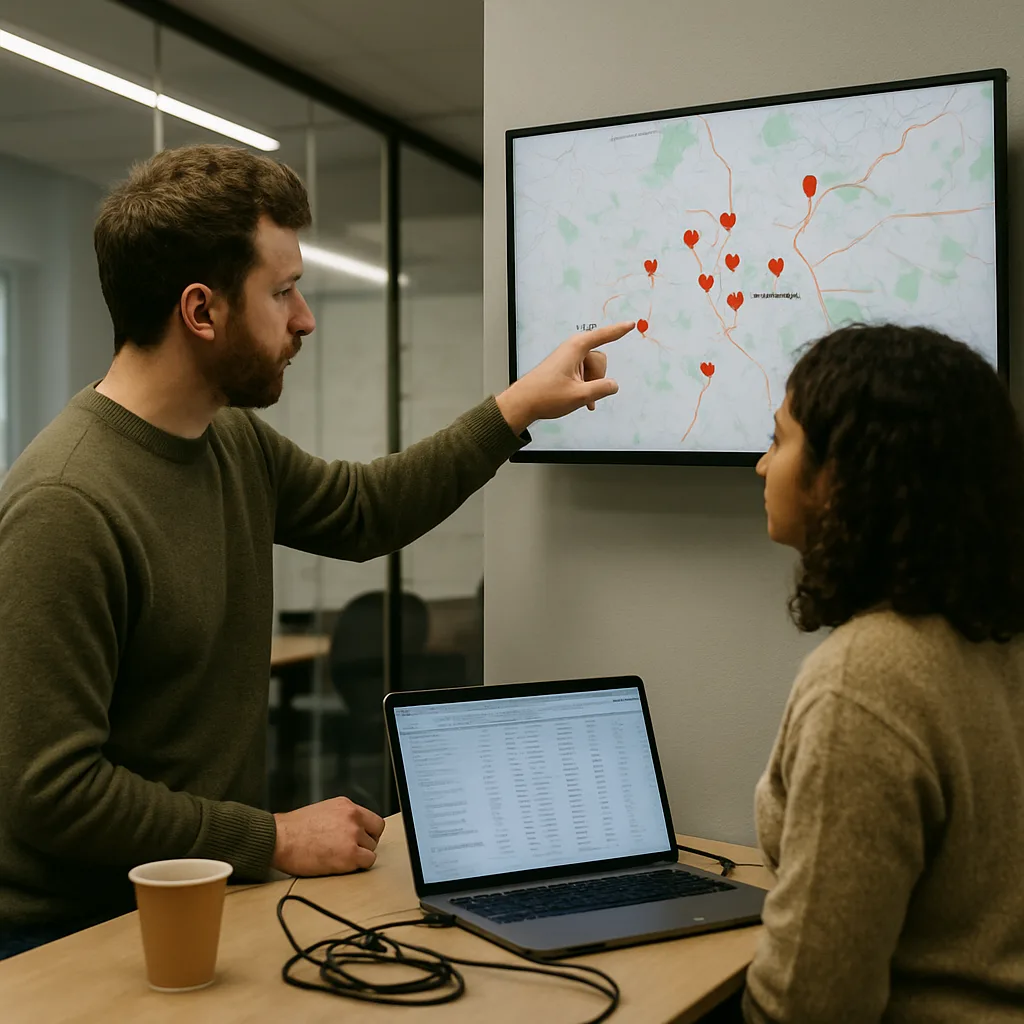
Team checking multi-location AI visibility map for Northampton marketing clients

Citations compound the problem. If your business is listed as ‘Northampton Heating Solutions’ on Google, ‘NHS Heating & Plumbing’ on Yell, and an old address on Scoot or Thomson Local, Claude has no single source of truth. It may blend details, cite an outdated phone number, or describe a service area that no longer matches reality. Inconsistency doesn’t just confuse customers, it actively degrades the accuracy of what AI tools generate about you.

This is why review response and citation building should be treated as ongoing AI accuracy maintenance, not a one-off reputation management project. Every review reply is a fresh, timestamped signal that shows your business is active, responsive, and current. Every corrected citation removes a conflicting data point that could otherwise mislead an AI model piecing together your profile.

  • Respond to every review within 48 hours, addressing specifics so newer, accurate context outweighs older complaints
  • Audit citations quarterly across Google, Bing, Yell, Scoot, and Thomson Local for matching name, address, and phone details
  • Update service descriptions in review replies to reflect current offerings, hours, or coverage areas across Northampton
  • Encourage recent reviews consistently rather than in occasional bursts, so Claude sees an ongoing pattern of activity
  • Flag and request removal of duplicate or defunct listings that create conflicting information for AI systems

Think of it as digital housekeeping. A single outdated citation or unanswered negative review rarely sinks a business alone, but left unchecked across months or years, these small inconsistencies accumulate into exactly the kind of muddled, outdated picture that Claude is prone to repeating. Regular attention keeps the signals clean, current, and aligned, so what the AI says about your Northampton business matches what’s true today.

Frequently Asked Questions

Common questions about Claude AI Search

Claude does not read your Google Maps position at all. It looks at your review text, your website details, and whether your business information matches everywhere online. A shop on Abington Street can sit fourth on Google Maps but still get named first by Claude if its reviews mention specific products and its hours are correct across the web. That is why we always check both separately for Northampton clients, rather than assuming a good Google spot means Claude will mention you too.

We start by checking your current listings within the first week, since that tells us how much work is needed. Most Northampton businesses have small mismatches between their website, Facebook, and Google Business Profile that need fixing before anything else happens. Once your details line up and your Google Business Profile is complete, Claude has clean information to work from. Trades in areas like Duston or Kingsthorpe with mobile numbers and no service area often need this groundwork first.

We first test how Claude currently describes your business, then compare that against your listings and website. You will get a clear picture of what is missing, whether that is unclaimed profiles, wrong opening hours, or thin review content. From there we fix the foundation, your Google Business Profile and citations, before touching anything AI-specific. This order matters because Claude reads from the same structured data everyone else does, so a shaky foundation undermines the rest.

The most common cause is mismatched details across the web. A retailer in the Grosvenor Centre might have one address on their website and a slightly different one on an old directory listing. Claude cannot confirm which is correct, so it often skips the business rather than guessing wrong. This happens a lot with independent shops on Abington Street and mobile trades covering Far Cotton or Wootton, where profiles were set up years ago and never revisited.

Yes, this is always the first step. Claude and other AI tools pull from existing structured data, and Google's business index is one of the richest sources feeding those answers. If your profile has old opening hours, a missing service area, or hasn't been touched in over a year, that is the real problem, not a lack of AI-specific work. Get your profile claimed, verified, and current first, then AI visibility work has something solid to build on.

It can, especially for logistics and trade businesses using Northampton's position near M1 Junctions 15 and 15a as part of their service area. If your listed coverage doesn't match where you operate, Claude has less to work with when someone searches nearby. Keeping your service radius, address, and business categories consistent across every listing helps Claude place you correctly, whether someone is searching from within the town or from a neighbouring area along the motorway corridor.

Ready to Get Started?

Audit your Google Profile and AI search performance for free. Call 07535 718 516 today.

Scroll to Top